Tim Scott, the lone Black GOP Senator, said last night that America, the country built by slaves, while murdering its indigenous populations, while writing laws that left out anybody with black skin, that forced Black people to protest in order to be able to vote, that forced Asian people into literal internment camps, that had a president spouting rhetoric that is impacting America’s Asian citizens across the country, that has a law enforcement population that mobilizes more quickly after they murder a Black man than when white people literally stormed the capitol, that is passing laws in conservative areas of the country saying it’s okay to hit protestors with cars, isn’t racist.
Seen here is Tim Scott, the Lone black GOP senator, dancing for his bread crumbs.
Tim Scott when McConnell told him to deliver remarks after Biden’s address.
It’s been a rough semester. Between COVID, insurrections, the cop’s apparent inability to stop killing Black people, even while one of them is being convicted for killing a Black person, I’ve been mentally exhausted. But, I’m here. I’ve got one class meeting, two papers to write, and that will be it for coursework in my Master’s degree. It’s surreal to think about, really. I never thought I’d be here. And now that I’m here, it’s very different than I thought it would be. The past decade or so, I have come to love and appreciate myself as a Black person. I look back and realize that I internalized a lot of anti-blackness. This is no surprise. Society is built this way. It is impossible to escape white supremacist ideology unscathed.
Coming into my MA, I knew that I was tired of reading white men. I completed an entire degree in Literature and read white men almost exclusively. I wanted to connect with a literary heritage from people who looked like me. I think back and wonder how any Literature program could let a student graduate without reading Toni Morrison, Richard Wright, James Baldwin, or Zora Neale Hurston. I wonder why I had to find authors like Colson Whitehead, Ta Nehisi Coates, NK Jemesin, Octavia Butler, Kimberle Crenshaw, June Jordan, Audre Lord, bell hooks, etc. I mean, I know why. It just shouldn’t happen. Of course, it was impossible to avoid reading white men while doing my MA, but I made sure to approach everything through a racial lens. Wherever possible I brought in Black authors, particularly Black women (#citeblackwomen), to contribute to my knowledge and the conversation. In my first year, I thought my thesis would be about how Straight White Men dominate the literary canon, or how few authors of color there are in the topic of rhetoric. The Faculty at CSU Pueblo have been outstanding and supportive. My topics were valid, accepted, and even though most of them are white men, they gave me resources and scholars talking about the same things I was. I’m going to add a reading list for my MA here soon. Both assigned and things I’m researching and reading on my own.
Anyway, as I dug deeper into the readings, I saw that everything I wanted to talk about was…already talked. Extensively. With like, research and data and shit. And so I started to think about where I could find my own topic within this conversation. I took thesis credits dedicated to this. But then, last Fall, I took a creative writing class. Through my education, I’ve internalized the belief that genre fiction was somehow less than “literary.” But, as Felicia Rose Chavez says in her book The Anti-Racist Writing Workshop, “‘Literary,’ in sum, means gatekeeper.” The teachers I’ve had, some on purpose, and others through the same pedagogy designed to uphold white supremacist ideology, ingrained in me this belief. It is in the past few years that I’ve managed to see outside of what I’ve been taught, been able to begin unlearning this dogma. And so, in this creative writing class I tasked myself with writing five stories in five different genres. And I wrote them all with Black characters. Something I have previously been unable to do until recently, because even in my mind, whiteness was the default. But getting over this gave me a creative freedom I didn’t know was missing. The stories, I think, were all pretty good, but one in particular was great. Some days when I go run, it’s hard, and I run out of breath really quick and I have to push through just to get my miles in. But some days, it’s easy, and I feel like I could run for miles. That’s what this story was like. When I finished it, I felt a sensation I’ve rarely felt with my fiction.
It was a story titled, “After the Accident,” and because of that feeling, and this sense of finally discovering my voice, I chose to pursue a creative thesis. I’ll be writing a collection of short stories this summer and a framework that I feel is aimed at Black students in English programs.
Tomorrow is the very last class of coursework for my Master’s Degree. This summer, I’m going to write and read, and write and read. But right now, I’m taking a breath to acknowledge how far I’ve come and what tomorrow’s class means. I never thought I’d be in the position I’m in now: Graduate school, teaching, and exploring my connection to and legacy of Black literary figures. But I am. And I think with the prospect of my death as a Black man in the news daily, I think these moments of respite are both earned and necessary.
I have grading to do and two papers to write, but that’s easy stuff at this point. Tonight I’m gonna chill and watch TV, and revel in the fact that, after tomorrow, this portion of my academic journey reaches its conclusion.
So I had a blog, and I paid for the domain name “A Black Lit Major.” I let it expire since I rarely ever updated it. Then, wordpress sends me an email with a great sale for, what I thought, was my blog domain. Happily, I paid for it, and then I go to edit my blog and it wasn’t showing my purchase. Because I bought a website.
So now I’ve got a website that, I’ll be honest, is just a more difficult to create blog. But, anyway, Imma try to update stuff more frequently.
I got a lot on my mind. I’m reading a lot as I finish my MA.
I own a black panther wallet. When my wife got it for me, I was overjoyed. It’s black with a silver, metal Black Panther logo. I immediately put everything from my old wallet in this new, Black Panther one. Because T’Challa is awesome, you see.
One day, while driving. I looked over to the cup holder (where my wallet always is when I’m driving, never in my pocket where I’ll have to reach for it if I get pulled over and asked for it), I noticed that the way the black and silver metal played against each other looked kind of like not a wallet. Were a cop to pull me over, they might see that not a wallet looking thing and think, “That’s gotta be a weapon.” We’ve seen time and again across the nation that it doesn’t matter what an object actually is. All it takes for a cop to “fear for their life” when black men are involved is the belief they’re in danger. I’m a large black man, so that belief will happen as soon as they see me. Something that looks like not a wallet could, potentially, push a cop over.
So I stopped using the wallet. It’s in my desk now.
Last night, news of another black man being murdered broke. People everywhere were sharing video of this modern day lynching. I’ve only watched one of these videos, Phillando Castille, and I’ll never do it again. Something broke in me after seeing it. I think it was how calm his girlfriend, Diamond Reynolds, was after witnessing the murder, and how there was a child in the backseat when the bullets were fired. How cavalier the cop was with three black lives in the car. How easy it would have been for the child to be orphaned if Diamond had reacted in any way other than how she did. I’m forced to wonder how much a black life is worth.
I think it’s safe to say that most black people have rituals to try and mitigate danger. I know that my size makes me a target, and so I have worked to make myself smaller in public. During this pandemic, while many of us are wearing masks, I have moments of panic that the white people I pass in stores cannot see me smile, cannot see the efforts I make to show that I am not a threat.
When I get in the car, I make sure my wallet is visible. When I go into a gas station, I make sure that my hands can be seen. I make sure that I’m making eye contact with clerks. When we’re out with friends and an order is wrong, or we need to address the staff in any way, I make sure that my wife does. I would never want to be considered a loud, angry black man. But ultimately, I think what I struggle with is that none of this matters, because it’s only going to take one mistake. Being in the wrong place at the wrong time. One unfortunate encounter with the police. Because of the environment in which I grew up, violence makes me uncomfortable. I cannot stand when people yell. I watched a boxing match with friends and had random bouts of crying for a week after.
But I know that none of this will matter. If something were to happen to me, I would be painted in the most terrible light by the media. Every excuse to justify my murder would be made. I know that there are people value me, my life. I know this. I revel in the love and community I find myself surrounded by. I know that I’m lucky. But I also know that I’m not unique in this. I know that we’re loved by our communities everywhere.
Ahmaud Arbery was murdered on February 23rd. Today is May 7th. There is video of his murder, this modern day lynching. People in power, with authority, saw this footage and sat on it for almost two months. Ahmaud’s family were lied to. They have had to sit with a tragedy, with no justice, without charges brought against the murderers for almost two months.
This is how I know black lives don’t matter. And this is why I’m tired. I’m so sad that something like this is even possible, but the weight of not being surprised is even worse. It took this video being leaked to the public for those in power to do what they should have done on February 23rd.
This could have been swept under the rug and they had video evidence. I’m just here thinking about all of the people who are getting killed without footage being caught.
My wife tells me to stop going outside. The worst part is that she’s only partly joking.
1. I hid my smile by placing a hand over my mouth until I was in my mid-20s.
2. I have trouble looking at myself in the mirror. It feels the same way it does when somebody reads something I’ve written while I’m there; like they have cut under a piece of my skin and have a finger under my flesh, poking at anything below.
3. A not small part of me tells me that everybody is lying when they compliment my writing. A not small part of me is ashamed at any praise, and wants to run away as soon as it starts. People have called me humble, but really, it’s a defense mechanism as I try to divest myself from the trauma of being around people who think I have any small amount of talent.
I don’t say any of this to fish for complements because, as I’ve said, it would mortify me, but to explain what this process of embracing poetry and the spoken word has meant to me. As I’ve gone through all of my writing, as far back as I have saved, has dealt with race. My first story was of some “dark” elves trying to fit in with the “light” elves, and what that social construct meant. My first poem is about my grandfather and how he and I speak different vernaculars. My identity as a black man has been in the back of my mind for a long time.
All of this is a long way to say how appreciative I am to have been voted “Poet of the Year” for Poetry719 (We do stuff!). It has been an intensely uncomfortable experience to have Ashely cheer me on and call me out whenever my name is brought up. I don’t think a lot of my poetry. I have only been writing poetry in earnest for three years, and I consider every one of the poets on the list better than I am. I would have been happy and more comfortable if any of my friends had won. But, what this experience has done for me, is help me solidify my voice. My first poets are written from rage and sadness. As I’ve learned, grown, heard so many other voices in this community, and changed through these experiences, I think the poems I’m writing now are coming from a more wholesome place. Not that there’s anything wrong with writing specifically from any particular mindset or emotion; it’s just that, as I grew as a poet, my emotions kept me writing very similar material.
I’m learning to be proud of myself. Of my achievements. I think, for everybody out there getting on stage, writing poems that bare your soul, and then share them with a group of strangers, should take a second to acknowledge just how difficult it is. I’m very fast to complement my friends for extraordinary things that I’m also doing, while not giving myself credit. So, this is me, taking a very rare moment to say that I’m proud of myself. The poetry that I’ve written in this past year is pretty dope. I’ve learned more about myself, more about my voice, and more about my goals very recently, and so going forward, it’s only going to get better. I’m definitely going to work on a book of poetry, and it’s definitely going to be great.
I want to take this moment to say thank you to some of the people who gave me space to own this realization:
As always, thank you to my wife, Dr. Sandy Ho, who helped me find my new tribe, who constantly supports my creative and educational endeavors, and helping find the resources to help me grow.
Thank you to Ashley, Chris Beas, and Phillip Curtis, for Poetry719 (We do stuff!) and everything you do in the community. I’m sure you know the work you’re doing is important, but I’m saying it here again. The work you’re doing is important. Not only that, but immensely appreciated.
To the Hotcomb Poets: Rosegold, Sipho, Rogue Scholar, Tyescha, Ashley, Beas, and Midnight. My tribe, my friends, and an endless source of joy, laughter, and poetry. You’ve all helped me grow so much since I met each of you.
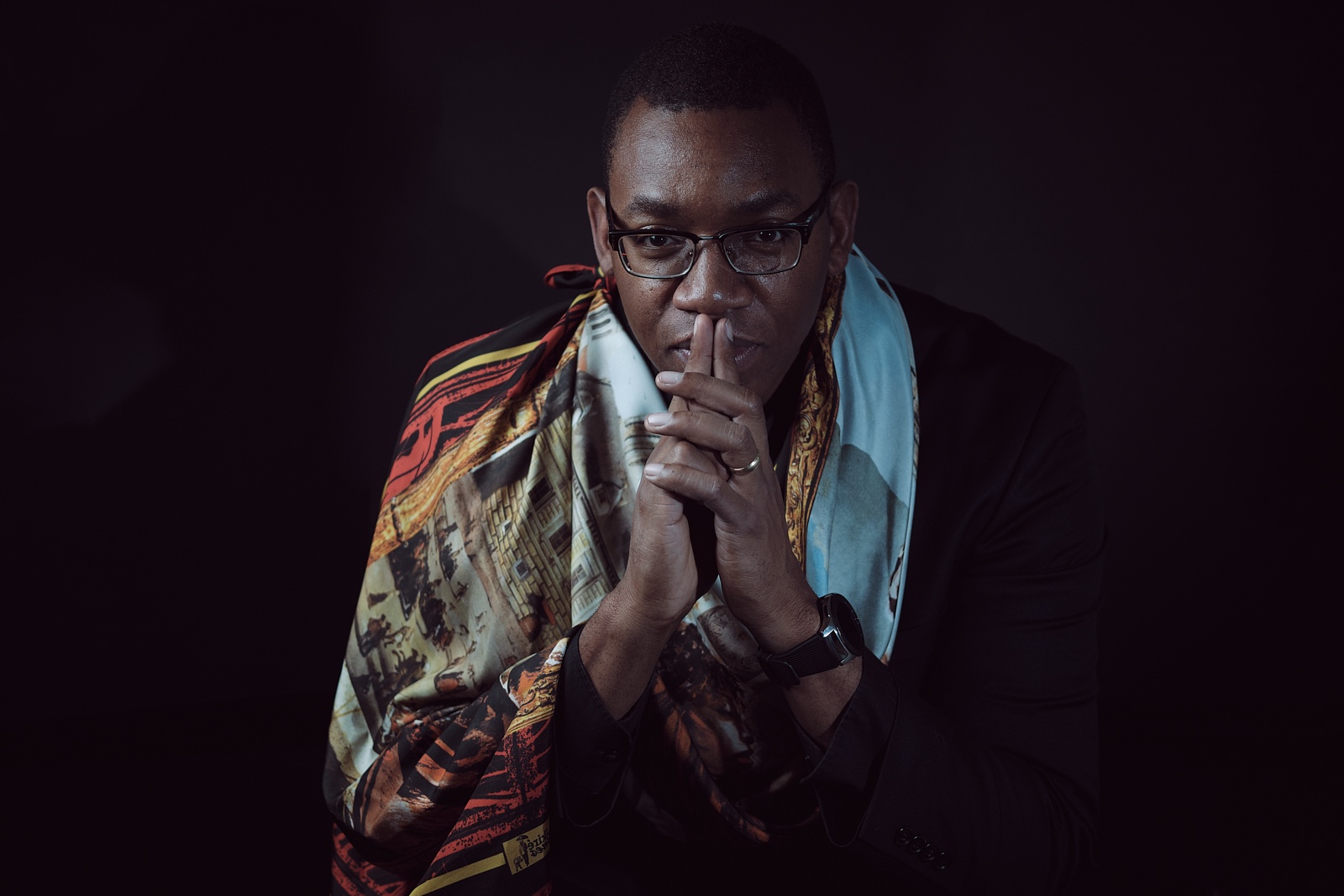
Chris Jones: (https://www.shotbytherobot.com) My longtime friend, and dope ass photographer. Thank you for taking the picture I’ll undoubtedly use in the sleeve jacket of whatever book I eventually publish.
To everybody who voted: It means more to me than you’ll ever know. Thank you. Thank you. Thank you.
My grandmother’s birthday is today. She would have been 77.
I haven’t been able to write much since she died. I’m a different person now, I connect to the world differently, and I guess I’m trying to figure out what that means for me, for my creative process, for my art. I just know that, no matter what else, there’s one less person in the world from whom I had unconditional love, and for whom that is also true. It feels a little bit like a safety net has been whisked away. I think of all the time we had, and how it seems after anybody has passed away, it was never enough.
I take solace in the knowledge that she was happy and comfortable her last days. She was surrounded by love, and she didn’t want for anything.
I tried, though. The first day or two from the hospital, she was out of cigarettes, and I didn’t want to get her any. My thought was that if she smoked, I wouldn’t have as much time with her. Everything in her body was shutting down, and adding nicotine to that couldn’t have helped. So when she asked for cigarettes, I selfishly said no. But my gramma has been smoking at least a pack a day for as far back as I can remember. She was okay those first couple days, but that third morning with no cigarettes was a bridge too far.
“If you ain’t gonna get me some,” she said, “I’ll go find them myself.”
The entire time I was in Pittsburgh, my gramma didn’t move from the spot behind the kitchen counter where she held court for everybody who came to visit. Except when she wanted those cigarettes.
She got herself dressed, because Judy Ellen would never leave the house if she wasn’t presentable, wrapped herself up in a winter coat big enough for me, she looked like a kid trying on her parent’s clothes, and wheeled herself outside and down the hall of the apartment complex. When she came back several minutes later she was wheezing, but she had a smile on her face that said victory. She laughed, a brief, “Ha ha!” and waved the cigarettes at me. Then she went behind the kitchen counter, lit up a cigarette, told me to switch the TV to Blue Bloods (she always knew when it would be on), and made herself a coffee (fill the cup half way, two creams, one sugar).
After that, I went and bought her cigarettes. And I got her some of those sugar covered orange jelly candies to boot. She always wanted those candies, my diabetic grandmother. I’d ask how many and she’d say, “Just get me two or three.”
I asked her what she would have wanted for her birthday. She said immediately, “I don’t need anything since you’re here.” To which I responded, “But I am here, so what else?”
“Just some chocolate cake, then.”
So that’s what I’ll be doing tonight. Eating some chocolate cake and some sugar covered orange jelly candies.
In the end
she faced death
a warrior
hair braided
jeans pressed
determined to look ready
for anybody
in the end
she woke each morning
when she could count
her days
on two hands
then one
with only fingers
she still took her coffee
the way she liked
with lots of cream
spent her day
talking with friends
as she sat in the kitchen
in the end
when she expected death’s call
she did not hide
she turned to faced the end
with a smile on her face
a cigarette in her hand
and laughter
always eager
to escape her mouth
and where others might tremble
she laughed
where others might cry
she sang
where others would choose
to remain in bed
she woke each morning
a smile on her face
a song on her lips
with love in her heart
in the end
when death came
she did not cower
she greeted it
on her terms
upright in her home
no longer an adversary
but the homecoming
of an old friend
in the end
she would pass
on her own terms
a smile on her face
laughter in her throat
surrounded by love
the same way she lived
Every other month a couple of friends organize a poetry event called Black Voices Matter. It’s been going on for over a year and its intent is to lift up and put a spotlight on black poets and performers that might not have a space they feel they can share their art. As a black man who has been going to A LOT of open mics, I have often felt the need to censor myself. Something like 8% of the population of Colorado Springs is black. Something like 13% of the population in America is black. What this usually means is that it’s not uncommon to go to an event and feel like you’re an island. What this means to me specifically is that I feel like I have to censor myself. Speaking just for me, the content of most of my poetry is directly related to how I navigate my life as a black man. This, very often, makes white people uncomfortable. This, very often, can make me seem like I’m a spokesman for black people and this poem is speaking for all of us. This, very often, can lead to conversations that I really don’t want to have. Some from spaces of empathy, some from spaces that make me want to cry and avoid opening up.
So every other month, we have an event specifically for black voices. All people are welcome, of course, this is not a segregated event. There is a workshop for the first hour where anybody can write from the prompt given and share what they’ve created. Anybody. White, Black, Asian, Latinx…anybody. After that is the open mic for black performers only. It is a space where, speaking for myself, I have felt the most comfortable sharing my poetry. It is a space where, hopefully, other people (white, black, Asian, latinx…anybody) can come to hear, learn, empathize, and grow with the pain inherent in being black in America, since that is often the topic of poetry the artists share.
As I said, there are many open mics throughout Colorado Springs, and since there are so few black people in Colorado, they are almost by default white open mics. But white people have a way to get all up in their feelings when they see spaces marked for black people. And they always have something to say. These are a few real things people have said and a response to them.
“Sorry. I’m white. I’ll just throw the room off. I’ll leave it to the included.”
I see this one all the time and there’s just so much wrong with it that I’m going to have a bulleted list within my numbered list.
Black people are used to seeing white people, Mark. Your presence doesn’t throw us off. On the contrary, you could be like the woke af white dude at a barbershop. Your presence in a space dominated with black bodies would let us know that you are at least interested in hearing us, learning about us. In a space where black voices are given priority, it would make us think that there are white people out there that might give a fuck about what’s going on in this country, in this state, in this city, and in this county. In short, this is projection of the highest order where the white person in question is actually thinking about how THEY would feel in a situation surrounded by blackness and thinking that the black people in the room would feel the same. But, you know, that’s our lives every. single. moment. But that you’re saying these things, Mark, says you haven’t thought about it.
“The included” is very problematic. Do you need to be part of a demographic to attend an event? Do you not have black friends that you’d want to support? I don’t have cancer, but I support Susan G. Komen. I’m not gay or bi, but I support Queer open mics and spaces. The thing people don’t realize is that when you’re a straight white dude (or woman) you are expected to be in places. These are the default. They are the norm. This in itself creates stress on marginalized people’s lives. So when you say something like, “Pumpkin Spice Latte Day” at Starbucks, that is going to be an inherently white space. Straight white people don’t need spaces dedicated specifically for them. It’s why America has History and Literature and in order to learn about people who look like me, I need to take specific classes about us like African American Literature and Black History. Saying that you need to feel included in every event is the very height of privilege. Not everything is for you, and when language puts a spotlight on others, instead of thinking about the circumstances that might arise that create such an event, you jump to, “Welp, not for me.”
All of this ignores the fact that this open mic DOES have a space for other voices within the workshop. It ignores that there are often many white people who are apparently comfortable with being “excluded” for one or two hours during an open mic because when they leave, they’re probably at least a bit cognizant of the fact that they are included everywhere else.
2. “I will just find other events that won’t judge me by the color of my skin.”
We ain’t thinking about you. We don’t care that you’re there. We got other shit to worry about than some white dude or woman that’s at a coffee shop trying to get something to drink or hear poetry while we’re dropping that fire. Again, stop projecting. I often walk into a place and think, “Damn, I’m the only black person in here…” because it can be a matter of survival. Just look at the news with white people calling the cops on black people for existing in a space with white people.
3. “Having a space for black voices only is retaliation for discrimination. The goal should be to not need these spaces and having them is stooping to the level of ignorant people and disregarding the ‘good people.'”
I almost can’t even with this. I actually couldn’t even, and then I gave myself a couple days. I still couldn’t. This ties into what a lot of liberal and moderate white people are telling many people of color. That we have to be civil, because if we are not civil, then we will run allies off into the hands of our enemies. These people will often quote the late and great Dr. Martin Luther King, Jr. Probably this picture here:
White people love to throw MLK around, as if he wasn’t a radical. As if he wasn’t upsetting the peace. As if everybody during the Civil Rights Era loved this man. As if he didn’t have approval ratings with white people about the same as Trump does with black people. People love to forget that he died. Not that he died. That he was assassinated. People forget that what he was doing for black people was so reviled, so disgusting, that it was worth his life. They were so angry that they killed him for it. Shot him until his life and blood seeped from him to be cleaned up by the (no doubt by a black employee) housekeepers of the hotel he died the next day. Leaving black people with a legacy, a memory, and loss. But most importantly, a reminder. No matter how much love you throw around, no matter how well-spoken, how articulate, how well reasoned our arguments. No matter how much we know we’re human, deserving of love, happiness, and equality, there will be white people out there who disagree. I think it’s guilt. I think it’s because deep down almost all of them know how wrong white people have done black people, and to acknowledge those wrongs would be like dominos. It’s like a big game of Jenga. You take out that piece and you’re left with unstable ground, you’re left with shitty logic, and poking at it all is just going to make it all fall. And once it falls, I think those white people wouldn’t be able to stand with it all. They wouldn’t know how to rebuild.
So you can miss me with that. Because we have so many reasons, every day to be angry. But it’s not us shooting up schools and voting racist people into office who destroy legacies and separate families. We don’t have time for your misplaced guilt and projection.
I’ve taken a break from Facebook. It wasn’t a particularly difficult decision since I’m on there almost exclusively because of my wife. When I’m old, Facebook photos will tell stories of our lives since we met, and I think that’s pretty amazing. After the election, my feed blew up with all types of arguments for and against Donald Trump. And then they’d blow up with arguments whenever a black person got shot by the police. My opinion on both of these topics is:
If you support Donald Trump, you’re racist. You might not think you are, but you’re okay with ignoring it and supporting a racist for whatever personal reasons you might have, and as such are enabling racism. So, ya racist.
Cops in America are a gang with too much power and kill way too many people. Nine out of ten times, there’s no excuse for it.
I weeded out the people with these opinions on Facebook by unfriending and ignoring them (on facebook, so that I wouldn’t see their comments). But recently more arguments have been popping up. It probably has something to do with the new concentration camps popping up. I don’t know. Anyway, that’s not what I’m trying to write about here. I’ve also taken a break from poetry. These two things are related. And because I’m an academic, I feel like I have to have some sort of flow and purpose to the blog even though it’s just a blog and I can really do anything I want.
Anyway…I’ve been doing writing poetry and attending open mics for a year and a half. I have met many amazing people, several people I’m proud to call my friend. For a year and a half I’ve put my pain on paper and listened actively as other poets shared theirs. For a year and a half, I’ve been a sponge for the trauma I’ve witnessed. The poetry I produced would wring some of it out, but not enough, and recently I’ve reached the saturation point. I can’t hold anymore, and when I try to write, all I can think about is how terrible everything is. And you know, lots of shit is terrible. You can just look at the news and see that. But my life is pretty great. My wife is amazing, my kids are whole and healthy. I’ve got a black panther shirt for every day of the week. It’s awesome. I realize I’m privileged, even if being a black man induces stress on the daily.
But the only poetry I’ve written has been based on this trauma, so lately when I try to write, it’s just made me immensely sad. The feeling goes away as soon as I stop trying to write. Because of this, with facebook, I’m taking a break from writing poetry and I’m going to scale back on attending open mics. I’m still going to go out, but I’ve been attending 4-5 open mics a month for over a year. My mental health needs to draw back. One thing that I did constantly while writing fiction and nonfiction is take note of my writing, where I’m excelling, where I could improve. I would note things I liked and didn’t like about my writing. I have never done that for my poetry. I have grown and changed as a person and a writer over the past year. I’m going to take a few months to think about why I still want to write poetry (because I do), and how I can grow from here.
Facebook and the arguments were contributing to the general malaise I’d felt, so I felt a need to draw back. See, it’s all connected.
I’m still writing in the interim. I’ve gone back to some fiction stuff that’s been brewing. It feels really, really good. I’m reading a lot more. I’ve finished TWO books in the past couple weeks (The new Stephen King book Outside (not my favorite) and a fantasy book by a black woman fantasy author NK Jemesin…the first book in The Inheritance Trilogy (pretty good!)).
Right now as I write this, I’m in the Youtube pigeonhole of listening to a bunch of spoken word poets. This is also enjoyable.
It makes me want to write poems…which is how I know I’m okay and that I will heal.
PS. I made myself not correct the different punctuations of facebook because it’s a blog and not a paper.
PPS. A blog post titled blog post is fucking funny. We can’t be friends if you disagree.



 To everybody who voted: It means more to me than you’ll ever know. Thank you. Thank you. Thank you.
 A Black Lit Major